Nobody can actually hear lossless audio, including you
That lossless badge on your music app feels like a promise, until you realize it's probably not reaching your ears at all. I break down what lossless, lossy, and high res audio actually mean, why almost every pair of Bluetooth headphones including AirPods can't deliver a true lossless stream no matter what tier you're paying for, and how a format called MQA got exposed for basically faking the thing it claimed to guarantee.
I also get into the actual science on whether any of this is audible in the first place, including a widely cited blind test where trained listeners barely beat a coin flip, and why the streaming service with zero lossless options is somehow crushing everyone else in growth. If you've ever felt smug seeing that little badge pop up on your phone, this one's going to mess with you a bit.
This ties straight back into the bigger issue I keep coming back to on this show: companies selling you a feature that sounds great in the app copy but quietly stops being true the second it leaves their servers.
Have you ever looked at a word on a screen and felt, you know, smarter for a couple of seconds, not really learned anything just felt smarter, you know what I mean? That's kind of what the word lossless does to people. It's a little badge next to a song title on your music app and suddenly you feel like you're hearing the record the way it was actually meant to be heard. The way it was made. The real thing. Finally, after years of getting that cheap MP3 version. Now stick with me for a minute because I'm not making fun of you. I did the same thing.
I'm Tyler. Thanks for being here today. In today's episode is about that little badge. Lossless audio, high res audio, all of it finally showing up in every streaming app minus YouTube music this year. And the question that nobody seems to be asking, which is whether any of us can actually hear that lossless high res version. Can you also, first up, standard disclaimer every episode, you know the drill. This is my read on it.
My opinion. Nobody signs off on this show, but me. Here's my confession before we get fully into this, before we dive headfirst into this. For about a year, I saw that lossless badge pop up on my phone. You know, you see it on Apple Music, you know, especially title if you've got that. And I'll be honest, I felt a little smug about it. I'm like, yeah, I get the real good version now and never once, you know, did I check whether my headphones could actually do anything with that higher quality file signal, whatever. I never checked.
I don't know. Maybe I didn't want to know. You know, some days I probably still don't, but it turns out not looking was doing a lot of work for me. And that's what Apple and Spotify and all these other companies are sort of betting on. So we've got to define the terms first because there's a lot of jargon that I'm going to spew out on this episode. This whole space runs on words that sound like they mean the same thing, but they don't stick with me for a minute. Lossless has one very boring, one, you know, specific meaning. When you unpack the file, you get back an exact copy of the original recording. Not close, not, yeah, you probably
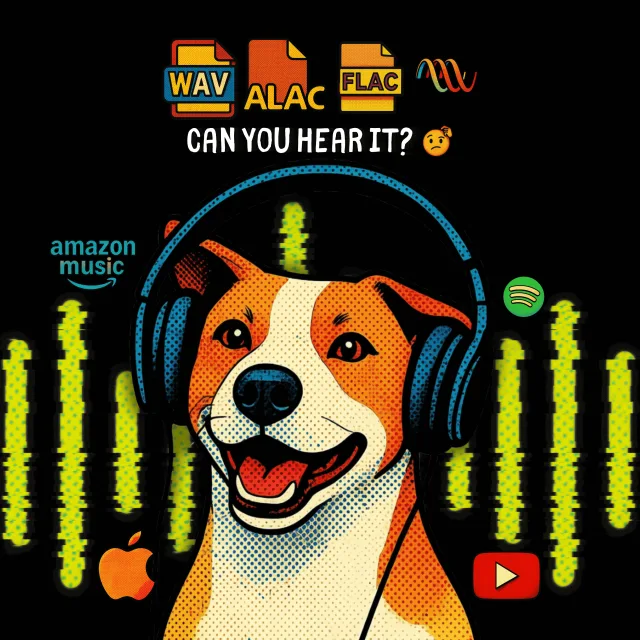
can't tell. It's identical. Flack, ALAC, Wave, that whole family. They're not even competing with each other on sound because, well, they can't. They all decode to the exact same thing that 20 year old forum argument, you know, the argument I'm talking about, whether Flack sounds better than ALAC is two people arguing about which photocopy is more accurate when both copies are pixel for pixel, the same damn thing one for one. So don't get caught up in those arguments on those audio file forms is what I'm saying. Now, lossy. So there's lossless.
We just talked about that. Now there's lossy. Lossy is the opposite. Lossy is that MP3, that AAC. Basically everything you grew up on. That's the kind of music that you were, you were downloading on like Kazan, Napster, and WinMX back in the day, MP3. AAC came a little later, but you know what I'm talking about, that watery, weird kind of compression sound. That's a lossy file. An algorithm basically looks at the song, guesses what you probably won't miss and throws the rest of it out the door forever.
Because once it's gone, it's gone. That's how you get the smaller file. It's also a it's a permanent decision made on your behalf about what you're allowed to hear. And one gacha here, one little kind of wrench into the plan is another term. It's separate from both of those that we just talked about, lossless and lossy. It's called high res, which just means higher resolution than CD.
Different, different thing altogether. A file can be lossless and not high res. A file can call itself high res and not be lossless at all. Hey, just hang on to that last one. We'll, we'll, we'll get back to it. I promise. Now, by this year, basically everyone has lossless audio now. Apple had it. Well, I shouldn't say had it. They have it. I think was Apple one of the first that kind of pulled the lever on that? I don't remember, but Apple has it. I've got Apple music. It's great. I love it. Sounds awesome. Amazon folded it into their regular pricing a few years back.
Title made it the default for everyone right out the gate. And Spotify, after teasing the thing for like four or five years, finally shipped it last fall free. No upcharge. Good news, right? Case closed. Everybody's ears can rejoice. Except almost none of you are actually hearing any of it. I know. Sorry to burst the bubble. And you want to know the reason why? The reason is Bluetooth. Here's the part that doesn't make it into the buzzwords, the ad copy, the, the promotions. And it doesn't even mention it in the app.
A true lossless stream needs way more room to breathe than a standard Bluetooth connection can even give it. It's physics. And I'll tell you why. It doesn't fit through the pipe. So something has to give in what gives every single time is the audio quality. Every mainstream Bluetooth codex squeezes that signal down and throws pieces of it away before it ever reaches your, your earhole. It doesn't matter which one AirPods, you know, that one specifically
runs on a codec that is not lossless by design. Doesn't matter what tier you're paying for. Doesn't matter what that badge on your iPhone is saying. Apple's own audio team basically said the, the, you know, the quiet part out loud to a reviewer. Their line was that the Bluetooth codec is about reliability, not about squeezing out the last bit of quality. Fine. That's a defensible engineering answer. Reliability over quality. But it also means functionally no AirPods on any current model
are ever handing you that lossless audio stream over a normal connection. That badge in the app describes a file sitting on a server somewhere, probably in California. It stops being true the second it leaves your phone. However, there's one exception. And it's a small exception. A quill com codec exists that genuinely does deliver an exact copy over Bluetooth, but it only does CD quality, not high res. And it needs a phone and a set of headphones both built specifically for it.
So if you're on an iPhone, you don't get that option because Apple doesn't support it. Now, when I said, you know, you can only fit so much over the pipe, it's physics. A CD quality file runs at a bit rate of 1400 kilobytes a second, a little bit over that. I'm just rounding it down. Bluetooth can't shove that through there. You know, Bluetooth can get somewhere 300. Certain codecs can get 900, but you're never quite getting it. Sorry, side tangent. Now, let's talk about the part of this that actually makes me a little bit fidgety.
There was a format out there called MQA. Stood for Master Quality Authenticated. Sounds fancy, right? Tidal built its entire premium tier around it, branded it as Masters. And the pitch was, this isn't just high quality, it's verified. There was a literal light on some hardware that would light up to confirm you were hearing the real Studio Master. Guaranteed. Made you feel special. But an independent researcher actually tested that claim and a good thing they did because,
well, when they ran real signals through it, checked what came out on the other end and what he found was that a lot of what got sold under that quote, unquote, Masters badge. Supposedly straight from the real Studio Masters looked a lot more like a regular file that had been dressed up and stamped with the same authenticity seal as the genuine thing. The process itself was adding noise into the audio, not even removing it. It was actually a good chunk of this. I mean, as they probably would. I mean, it's making them look bad.
And they said that they never used the word lossless in the strict, you know, technical sense. So I'm not going to stand here and call it a closed case, but here's what happened next. And nobody disputes this part of it. The company went into administration, bankruptcy, whatever. In the following year, title quietly pulled every piece of MQA content off of its platform and moved back to plain old flak. I say plain old flak. Flak is still, to me, the gold standard, but you know, when the format collapses in the company that built its whole
premium identity around it, deletes it a year later, you know, the market sort of rendered its own verdict. I don't need a lab coat to figure that one out. So when do you actually get the real thing? I know it kind of seems a little depressing up till now, right? But let's talk about it. A bit perfect, you know, right cable, no compression anywhere in the chain. Does it even sound better? Well, honestly, the science is still kind of split, which I respect because it means nobody's
trying to sell you a clean answer. There's an old, well-known study where researchers ran blind listening tests for over a year on serious equipment using, you know, actual audio engineers and self-described audio files as test subjects. Quietly slipping a CD quality bottleneck into an otherwise high res playback chain. You know what? Nobody could reliably tell the difference. Not one person did better than a simple old coin flip. A newer, much bigger review pulled together close to 20
separate studies and thousands of individual listening trials. And that one did find real measurable ability to tell high res apart from the regular audio. But even in that one study that found a genuine effect, trained listeners, people who specifically practiced this skill, knew what they were listening for, were only getting it right a little better than a coin flip. 50-50. That's the winning result. Barely better than a coin flip.
Public blind tests go even further. One well-known public test had regular people try to pick the true lossless track out of a lineup and the results landed right around basically random guessing. On one track, more people actually preferred the compressed version over the lossless one. So, you know, real differences probably exist in a quiet room on really good expensive gear with really trained practice deers on the right kind of recording. They're probably small. They're very, very conditional. For how most of us actually listen
on a bus, in a car, walking the dog, background noise everywhere, where you're really not going to tell the difference. And here's the stat that, you know, sold me on the whole theory. The one major streaming service that still offers no, absolutely no lossless options of any kind has also been the fastest growing paid service in the country for the last few years running. Not close either. People are picking a service with no lossless
tier at all over the ones that do have it. In huge, huge numbers. Meanwhile, you've got surveys where most people say they'd happily pay more for higher quality audio, which tells you people are pretty good at describing what they think they want and not that great at actually acting on it once it's sitting right in front of them. And that service that has no lossless audio whatsoever, that's YouTube music. Now, you know, with YouTube, that's kind of a mixed stat, because yes, it is the fastest growing,
but YouTube premium subscribers do get access to YouTube music, so the numbers might be a little muddy there. Okay, so a couple of things I want to walk you, I want you to walk away with. One, lossless streaming became the free standard no extra charge default everywhere. Well, I mean, that's a really good thing. There's no downsides to that. I'll take it happily. If you've got the gear that supports it, great, you've got the option to hear it. Now, another one, if you're, you know, if you're on wireless earbuds, especially AirPods, that badge is just a decorative thing on that app. It's describing the file, but not the sound
you're actually hearing. If you ever actually want what, you know, these companies are promising you need a wire or a very specific, you know, matched hardware that most people don't have and probably won't ever bother getting. And one more, even when you do get the real thing, the honest research says most of us can't reliably hear the difference anyways, which doesn't make any of this really a scam. You know, exactly. It just means that the marketing is selling a much bigger, it's making it a much bigger deal than it really is. Or your ears can hear,
you know, any of this can actually back up. That's kind of the whole show in a nut show, isn't it? Something gets built well, quietly, correctly, and then it gets sold to you with a lot more confidence than the truth can support. That's the episode. If you want to keep up with it, subscribe wherever you're listening. And if you're, you know, if you've got a second, you're looking for something to do, you got a free moment, drop a five star rating. If you, if you would rather just talk to me, you can leave a voicemail. I've got an actual phone number set up for that now, 608-668-4702. Again, 608-668-4702. You can text,
you can leave a voicemail at that number, or you can email me studio at tylerwoodward.mp. That's what I got. I'll catch you guys next week.`