
EP 35: WHY INTERNET RADIO GOT TOO EXPENSIVE FOR REGULAR PEOPLE
DESCRIPTION
Tyler breaks down why running a small internet radio station went from a fun hobbyist project in 2009 to a legal and financial minefield today. He walks through what changed after the small webcaster provisions expired, why licensing now means dealing with multiple performance rights groups plus SoundExchange, and how the math stopped working for anyone who isn't a billion dollar streaming company. It's a plain look at how a rule meant to make sure artists get paid ended up locking out the little guy while giants like Pandora barely feel it, tying right back into the bigger fight over digital ownership and who actually gets to participate in tech.
CHAPTERS
TRANSCRIPT — EP 35
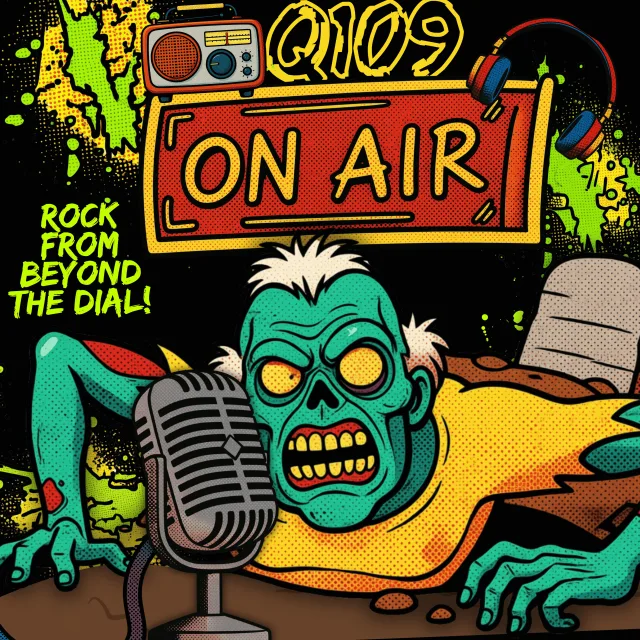
The last time I tried to run my own internet radio station was probably back in 2009. It was called Q109 Rock from Beyond the Dial. I had my own little ice cast server running. My music licensing was handled through a company called SW Cast and honestly it worked pretty well. It wasn't pretty, it wasn't fancy, but I was streaming rock music to whoever wanted to listen. And I was doing it completely legally before I even ever got into broadcast radio and got into the
whole broadcast engineering side of things. I didn't start officially. First real job in commercial radio till 2014. and I haven't ran an internet radio station since. And I went back the other day and I was looking at it because I'm like, you know, maybe, maybe I'd like to do that again. Man, it's a lot harder now than it used to be. My name's Tyler. Welcome to the podcast. And today I'm talking about internet radio licensing. What it looked like in 2009 versus what it looks like now. And well why the gap between those two things is I mean larger than the freaking
Grand Canyon at this point and I I can tell you right now I'm not doing another internet radio station Quick disclaimer before I get into it. This is all my opinion my experience my point of view I work and broadcast but this show Isn't my employer talking. This is just me now back in 2009 there, there was real options out there. If you wanted to run a small webcast, SW cast was a licensing aggregator, as they call them. You pay them. They handled your sound exchange and what was it a pro obligations behind the scenes. And you went on with, with your life,
your legal loud city did the same thing. So did a stream licensing. And if you wanted the whole package, the hosting, the streaming and licensing all on their one roof, well, you could go with Live 365. Live 365 was the entire stack in one subscription. You paid a monthly fee. They covered your royalties and you had a station. You could even put all your files, all your music on there and set up your automation. Thousands of people were doing this. hobbyist, music nerds, people who just wanted a themed radio station because commercial radio wasn't playing what they wanted to hear, which fair. I get it. I went via the,
uh, the ice cast route and I think I did shout cast at one time, but I went the ice cast route because I wanted more control over the technical side because obviously I'm a nerd. If you haven't guessed yet. SW cast handled the licensing. I handled everything else to me. That was cool. You know, arrangement. I don't know. And then, and then the hammer came down on SW cast. They got caught red handed. The short version is, well, they weren't paying what they were supposed to be paying sound exchange. They were collecting licensing fees from people like me. and not passing the money through correctly. Sound exchange obviously
eventually figured it out. Things went sideways fast and SWCast was done. Which meant I was done too because you can't continue streaming music online without music licensing. They come at you fast. My licensing coverage evaporated when SWCast shut down. I wasn't going to rebuild the whole setup again from scratch. So Q109 went dark. I didn't think much about it at the time really. I mean, life moved on. I got deeper into broadcast engineering less than the hobbyist internet radio stuff anyways. And I filed, you know, running my own internet radio stream away
as things I used to do formally an internet radio station programmer. janitor because I did all the things until recently I you know when I started actually really considering doing it again because live 365 is still out there it's not the same group who owned it back then but they're still running and let me tell you that shit's expensive for hobbyist stations like 70 bucks a month And the thing that you need to understand about music licensing, especially for webcasting, it's not
one license. It's not even two. It's a whole blanket. It's a whole stack of shit. Every recorded song carries two separate copyrights. One covers the composition, the melody, the lyrics, the underlying musical work. that's handled by the performance rights organizations. You know, the guys like ASCAP, BMI, I don't know, SESCAC, S -E -S -A -C, I don't know, and GMR. The other covers the actual sound recording, you know, the specific performance you're hearing. That's the sound exchange part. Terrestrial AM and FM
radio. only ever pays the composition side. Over the air, broadcasters have never had to pay sound exchange a dime for the master recordings they play. That exemption has been baked into U .S. law from the start, and there's a whole separate fight happening right now about whether that should change. Different episode. Webcasters pay both, always have. The DMCA made that a law back in 1998. So right off the top, you need licensing from multiple different organizations because ASCAP, BMI, SESAC, SASAC, I don't know,
GMR, each represent different catalogs. And you need all of them if you want to play anything without some serious gaps then sound exchange on top of all of that the sound exchange rate right now for a non -subscription commercial webcast or whatever sits at a quarter of a cent per performance it doesn't sound like a lot it isn't until you start doing the math a a performance is one song to one listener so 20 people tune
in you play a song that's 20 performances run 12 songs an hour and that's 240 performances an hour a small station with 20 consistent listeners ends up owing somewhere around three to four thousand dollars a year in you know per performance royalties alone before a single pro gets paid pro and there's a minimum fee on top of that a thousand dollars a year per station just to be in the program whether anyone's actually listening to your station or not so your floor just sound
exchange is a thousand dollars a year, before ASCAP, before BMI, before the other guys, before whatever you're paying to actually host and stream the audio. In 2009, there was reduced rates for small webcasters, a revenue -based structure that actually acknowledged the difference between hobbyist and the likes of Pandora. That went away. at the end of 2015, when the Webcaster Settlement Act expired and the copyright royalty board just didn't replace it with anything small webcaster friendly. Flat per performance rate
for everybody. That's the ruling that actually killed off Live 365 the first time. January 2016, Thousands of independent online radio stations went dark because, well, the math stopped math -ing. Stopped working overnight. Live 365 eventually did come back. They got acquired, relaunched, and today exist as an all -in -one platform where the licensing is bundled into your subscription. You pay somewhere between 60... and a hundred dollars a month at the entry level and they cover ASCAP, BMI, sound exchange, GMR and the rest.
It's the easy button if you actually want to do this kind of stuff. The trade -off though is you're on their platform, their infrastructure, their rules on licensing, hour caps and, you know, overage billing. But for a small, operator, it's a, it's a pretty decent choice because the alternative is doing all that leg work yourself. And you really don't want to get into that mess. You know, I don't, I don't think anyways, unless you're really motivated, but you know, you know, and I, I get the appeal of doing it yourself.
I mean, shit, I ran my own ice cast and shellcast servers back in the day. I liked the control, but you know, assembling the stack manually means a sound exchange minimum of a thousand bucks a year. BMI starting around 350 ASCAP, I think is around the same. And then you got the other guys who don't even publish their rates to the public. So you have to call and ask going in blind on two of the four. Yeah. I don't want to do it. Then there's the reporting aspect. Just cause you got licensing doesn't mean you're good. Sound exchange wants a monthly statement of account track by track. They call them ASRC
codes. I don't even know what the hell that means. Every song, but basically every song you played into how many listeners. Yeah, it's not impossible, but a real administrative burden that will eat time that You're probably not planning to spend doing. I mean, there's also platforms like radio .co. They'll hand you the streaming side of it and nothing else. The licensing is still your problem. They'll point you toward a, um, you know, the licensing bodies and wish you luck on your adventure, but they're not going to help you do that part. Realistic DIY. has to land somewhere north of $1 ,700 a year. Before one
person has ever actually listened to your radio station, and that's before the per -performance overages once you grow past whatever the minimum covers. In 2009, that wasn't the situation. The small webcaster provisions made it manageable. Aggregators like SWCAS made it more manageable. The whole ecosystem existed to let the small operators participate. Well, as we know, that whole system is now mainly gone. What's left is, well, pay for life 365 or figure it out yourself and hope you budget accordingly. There's no in
-between anymore. I'll be honest, man, when I started thinking about spinning up a new station, cause I got a lot of music I want to play. I would love to go back and relive some of my on air shenanigans. I don't know. But, you know, I wanted, I wanted to dust off the old skills, set up an ice cast, find a license aggregator, point a stream at something else. Cause it's never been easier. Than it is right now Because in 2009 the tools weren't great either better tools nowadays cheaper hardware running a Solid stream. That's not the hard part anymore. The
hard part is the legal compliance man, and that's gotten way more expensive way more complicated since that whole small webcaster provision expired I hadn't looked into it since I Got out of the game, but holy crap, man. And I want to, you know, I want to be clear. I'm not saying artists and labels shouldn't get paid. Obviously they need to get paid. That's not the argument. Sound exchange exists because webcasters were playing music and the people who made it, they weren't seeing a dime. That was a real problem and it needed to be fixed, but The problem is the rate structure they fixed it with doesn't distinguish
between a hobbyist little bitty station, you know, running out of your closet to 30 people in a company worth billions of dollars. I art doing the same thing. Pandora, who is now owned by Sirius XM can absorb a quarter cent per performance across hundreds of millions of listeners and build a whole business model around it. The retiree who just wants to stream some classic rock to his friends, he can't do the thousand dollar minimum before anyone's heard his single song. The law that was supposed to level the playing field ended up entrenching the advantage of scale.
That's the part that's hard to sit with. If I were doing this today, honestly, I'd probably just go live 365, give up the ice cast server, give up to control, everything approach, pay the monthly fee, let them handle the paperwork because the alternative isn't really viable at the scale I'd be wanting to operate at. Q109 man, raw from beyond the dial. It's not coming back. Not because I don't want it to, because I just, I can't afford that. That's the... That's a that's a hard thing to say out loud. Maybe maybe I'll spin up one of those playlist websites I'll make playlists for Spotify or Apple music or something. I'll do that instead. I guess It's
way cheaper to get into And you think about like the other thing That we didn't really talk about You know with the artists getting paid You look at the guys like Spotify and Apple music Apple music paying a little bit more to the artist than Spotify, but they still ain't paying them that much either. So that's the show for now. If you want to keep up with it, subscribe wherever you listen. And if, if anything else, if you want to buy me a coffee, you can head over to Tyler Woodward dot me. It did a little link at the top of the page. Also make sure you subscribe with Apple podcast now. I'm going to have ad
-free episodes and eventually exclusive episodes for members on there that you can get or nobody else can get. Also, it really just helps pay the hosting costs. That's all it's really going to. So again, Tyler Woodward dot me. You can find all the socials there. You can find past episodes. You can shoot me a message if you like. I'll catch you guys next Tuesday with more random thoughts from some guy in Wisconsin. Have a good one.