
EP 17: MAXXCASTING: FIXING FM RADIO'S COVERAGE PROBLEM
DESCRIPTION
"FM coverage maps look bold and confident, but the actual audience listens six feet off the ground, weaving between buildings and hills where signals get chewed up. That's where audio turns fluttery and listeners quietly tune away. And the old "just add a booster" fix can make things worse in the overlap zone.
MaxxCasting, built by GeoBroadcast Solutions with GatesAir hardware, is cellular network thinking applied to FM: multiple low-power directional booster nodes on the same frequency, engineered with terrain data and time-aligned so the handoff in your car is seamless. The stakes go beyond sound quality. If the Nielsen PPM can't decode your signal, your listening doesn't count, your ratings slip, and advertisers never pay for the audience you actually have.
I also cover the question engineers always ask: how EAS fits into a synchronized booster network, what changes with zonecasting, and why the NAB still has concerns about scaling it in the real world."
TRANSCRIPT — EP 17
So Odyssey just announced they're deploying max casting into New York City WCBS FM and WXBK FM And I had this embarrassing moment where I realized I've been hearing this term for a couple of years now I work in broadcasting and I genuinely I couldn't explain to someone how it actually works if they asked me right now So instead of pretending any longer, let's learn this together This is the Tyler Woodward Project, and today I'm talking about Max Casting, what it is, how it works, whether if it's the future of FM radio or just a really good marketing tactic from a company in Chicago. Because I know you're going to ask, how the hell does EAS fit into any of this? Let
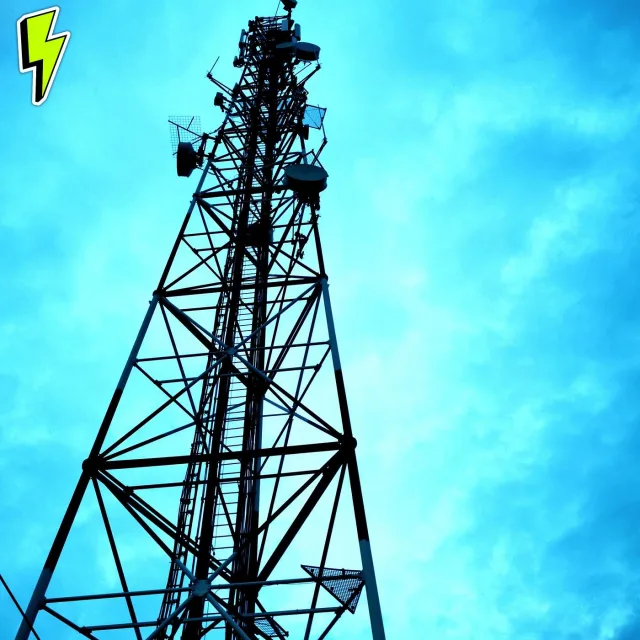
me start with the problem max casting is trying to solve because none of this is gonna make sense without that FM radio has a dirty secret Your main transmitter is on top of the tower somewhere pumping out the signal Coverage maps look great right big confident circles lots of color but those maps were drawn assuming ideal conditions and rooftop antennas and That's not where your listeners are Real listing is happening down in the cars maybe six feet off the ground moving through city streets Threading between buildings rolling through valleys terrain eats signal buildings eat signal Geo broadcast solutions GBS the company
behind max casting and know this is not sponsored says as many as 80 % of FM stations don't Fully cover their own license service area because of this 80 % So for decades the fix was throw up a booster transmitter same frequency as the main Extra power fill the gap simple idea the problem is in the overlap zone Where the main signal and the booster signal are both hitting your car radio at the same time from slightly different distances They arrive a tiny fraction of a second apart. That tiny little misalignment, that fraction of a second, turns your audio into
a muddy, hollow, fluttery mess. Listeners are going to tune away. Engineers cringe. Nobody wins. That's the problem Max Casting was built to solve. Okay, so what actually is it? Maxcasting is a system developed by Geo Broadcast Solutions in partnership with Gates Air, who makes the transmitter hardware. At its core, it's a synchronized network of multiple low -power FM booster transmitters, strategically placed around a market, all locked to the same frequency as your main station, all carrying the same content and perfect time alignment
with each other. The Keyword is synchronized. GBS basically borrowed a page from the Cellier Network Engineering Playbook. They looked at how cell carriers build overlapping coverage with node dead zones and said, we can do this for FM. The system uses GatesAir Flexiva Transmitters and their Intraplex SynchroCast IP distribution system to lock every booster node to the same audio timing as the main. When your car radio moves from the main signal into the booster zone, the transition is completely seamless. Your ears don't notice, your radio doesn't stutter, your
PPM meter doesn't miss a beat. And this isn't just point some antenna at a city and hope for the best. The boosters are, you know, they're low to the ground, highly directional. pointed precisely where the coverage gap is. GBS does all the network design using high -resolution terrain data, actual building heights, real -world field measurements. And, not only that, but they're using vehicular traffic patterns. They're treating it like a cell deployment, which means it's actual engineering instead of guesswork. Now here's why a broadcaster actually cares about this beyond, hey, It just sounds better. If your signal is too weak or too distorted and part of your market,
the Nielsen Portable People Meter, the little pager -looking device Nielsen uses to measure radio listening, it can't decode it. No decoded signal means no measured audience. No measured audience means those listeners don't exist, as far as your ratings are concerned. And no ratings means advertisers aren't paying for them. You're broadcasting to real people, but they don't statistically exist. Maxcasting fixes that. In San Francisco, GBS helped Bonneville upgrade three stations, and by December 2025, four of the top five FM stations in the market were Maxcasting licensees.
KQED. public radio has held the number one overall station position in san francisco since activating max casting odyssey then deployed it on kllc and kits and added seven booster nodes that extended their reach to another 800 000 people in the south bay nationwide GBS claims 13 million incremental listeners added across all deployments. And look, I take vendor numbers with a grain of salt. But when four of the top five stations in a market are using your product, something's gotta be
working, right? So who's actually using this thing? As of late 2025, GBS has deployed in 11 markets. San Francisco, Los Angeles, Chicago, San Diego, Miami, Baltimore, Boston, Cleveland, Las Vegas, San Jose, and St. George, Utah. New York City and Atlanta are in the design phase right now. Six of the top 10 Nielsen radio markets either have it or are working on getting it. And it's not just commercial radio either. WYPR in Baltimore, an NPR affiliate, deployed Maxcasting to link WYPR on 88 .1 FM in Baltimore with WYPF
on 88 .1 FM in Frederick, covering the I -70 corridor between the two cities. Before Maxcasting, those two same frequency transmitters were fighting each other in the overlap zone. Now they're synchronized. Problem solved. The deployment spans Bonneville. Audacity, Spanish Broadcasting System, The Educational Media Foundation, West Virginia Radio Corporation, a genuinely broad mix of group owners and independents. Alright, how complicated is this for engineers? Be honest. Well, the honest answer is, it's a real project, not a plug and play box. GBS does do the heavy network design work, terrain modeling,
propagation tuning, interference zone analysis, and they're treating it like a cell network design, which means it's sophisticated. At each booster site, you need a Gates Air Flexiva transmitter, a directional antenna at a deliberately low height, and a stable, dedicated IP connection back to the main station for the SyncroCast synchronization to lock. That distribution path needs to be a reliable managed IP circuit not the public internet Because the timing requirements are tight and you can't have jitter messing with it Each booster site also needs to be licensed with the FCC as a booster facility Standard process, but it adds a little lead time GBS handles most of the FCC
filing support as part of the process So it's not Two engineers in a weekend, but it's also not a two -year custom engineering odyssey. It lives in the significant project with expert support category. For programmers and traffic people? In its base form, max casting requires exactly zero changes to your workflow. Every booster carries the same audio as the main. In perfect sync, your automation system, your play out, your traffic logs, completely untouched. The transmitters are just invisibly extending your signal, completely transparent to the programming side of the house. Now that changes if you move
up to Zone Casting, GBS's next level product that the FCC fully greenlit last year. Zone Casting lets you originate up to 3 minutes per hour of different content on specific booster zones. Think localized ads, neighborhood traffic, whatever you can think of. That does require automation integration to schedule and insert zone specific content, but that's an optional upgrade, not the base product. Now let's talk about the emergency alert system, because I knew this was coming. In a standard max casting deployment, EAS works exactly the way it always has. The main transmitter carries the alert, the boosters relay it in perfect
sync. Listeners everywhere in your coverage area hear the alert simultaneously. From an EAS standpoint, the system behaves like one big giant radio station. No gap, no delay, no problem. The complication enters with zone casting, where a booster is originating its own content during those short local windows. The concern, and it's a fair one, is what happens if an EAS alert fires while a booster zone is airing localized content instead of the main feed. GBS's answer is that EAS overrides the zone content immediately. The FCC requires EAS compliance for all originating boosters and
found in its review that properly engineered systems handle this without disrupting alert delivery. The NAB's counter -argument is that GBS tested this under controlled conditions with a small number of sites. Large -scale real -world deployment across complex RF environments hasn't been independently vetted at scale. That's not an unreasonable concern to raise. The NAB had A lot of feelings about zonecasting in general. 49 state broadcaster associations signed a letter against it. Now that's a whole separate episode.
For the pure maxcasting simulcast case, which is what most deployments are right now anyways, there's no EES concern worth losing any sleep over. The engineering side just works. For zonecasting, The override mechanism needs to be solid and the design needs to be done very carefully. So is Max casting the future of FM radio? Honestly, it's a really practical bridge. It doesn't reinvent radio. It doesn't solve the streaming problem or make FM cool again by itself. What it does is recover the audience FM was supposed to have,
the people inside your license contour, who just can't hear you clearly enough to count. That's a revenue argument as much as a technical one, to be honest. For engineers, it's real work, but it's a well -supported product with a methodology behind it. For programmers, in its base form, it's completely invisible, which is kind of an elegant solution, really. For listeners, they'll just notice that a station sounds better in the neighborhood where it used to cut in and out. In the zone casting piece, geo -targeted local content, hyper -local ads, neighborhood -specific information, that's where it gets genuinely interesting
and genuinely controversial. That's one... I'll save for a future episode. For now, max casting is what happens when someone finally applied a cellular network thinking mindset to an FM booster problem that's been annoying engineers for well over 40 years. I'm Tyler. Thanks for listening to the Tyler Woodward Project. Follow me on Instagram, Blue Sky and threads at tylerwoodward .me. make sure you head over to Tyler Woodward .me check out the brand new website you can get in touch with me over there and whatever podcast app you're listening to this on apple podcast spotify amazon music youtube pandora leave a review a like subscribe all that stuff it it
helps i'll catch you next time